
Another recollection from the Teesdale Mercury article written in February 1927.
When Mr. William Chapman was born Lynesack Church had not been long built, nor Lynesack parish formed. He was the fourth child to be baptised there. One of the first burials in Lynesack churchyard was an Irish lad from Quarry Lane, Butterknowle, over whose remains a “wake” was held. The coffin, made at Hamsterley, was carried by two men who fought on the road before they reached the home of the dead, having first stood the coffin on its end by the roadside.
Mr. Chapman’s father was Lynesack’s first sexton. The first person baptised in Lynesack church was Alice, daughter of Joseph and Alice Parkin, on October 29th, 1848, the father being a pitman. The first marriage was on October 9th, 1848, George Smith and Anne Dent, both of Butterknowle, being united. The first burial in the churchyard was of Margaret Blackett, of Benty Close, aged 12 years, on December 30th, 1848.
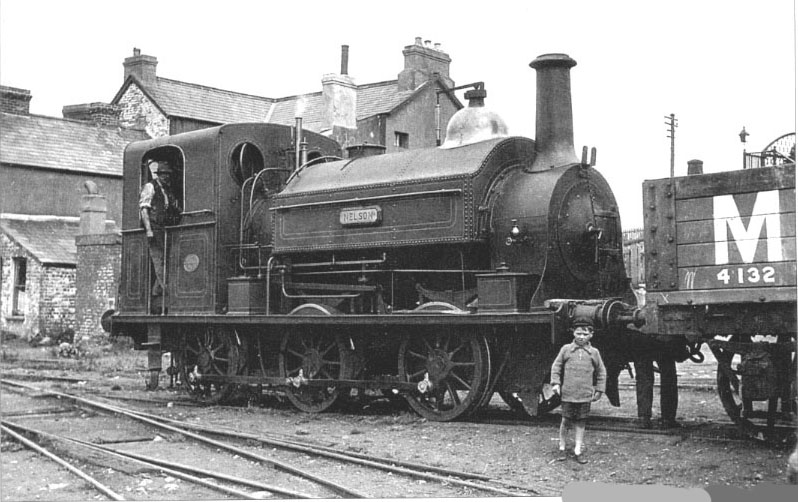
One of Mr. Chapman’s most vivid memories is of the year 1854, when the first engine came up the Haggerleases railway. Prior to that, horses pulled the wagons up the bank and rose back to Brusselton bank Foot in dandy wagons. The rails were fixed to stone blocks, some of which can be seen at the old Diamond Engine House, Butterknowle, which was partly built of them. Once, when an engine came along this line, some of the stone blocks (there were no wooden sleepers as now) gave way and the locomotive dropped off.
In this connection Mr. Chapman recalls a couple called Elsie and John who went on one of the first railway trips from the Butterknowle district to the east coast, starting from Lands station, as it was then called. On the return journey, when St. Helens was reached, Elsie got alarmed and refusing to travel further, made John get out and walk the rest of the journey. Mr. Chapman recalls that this same Elsie, when her end was drawing near, expressing the wish that when she was dead she might have an extra pair of stockings, for, she said, it would be very cold crossing the fell to be laid to rest at Cockfield.
Recent Comments